
 Hudson Thomas
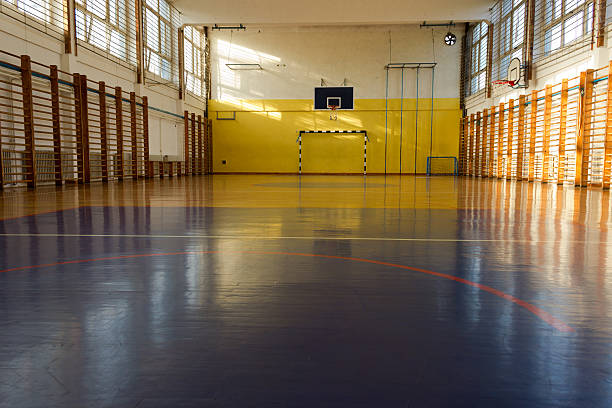
A sports hall often contains surfaces that were designed for the building rather than for running games. Structural columns, projecting corners and the edges of door recesses can sit close to activity areas. A sensible survey begins by watching how pupils move through the space. A hazard is more than a sharp-looking edge: it is a hard surface that someone could realistically contact during an activity.
Look at how the hall is used
Basketball, indoor football, gymnastics circuits and school assemblies may send people along different routes. Portable equipment changes those routes again. Staff should review where players accelerate, turn, compete for a ball or lose balance. They should also notice where queues form and where pupils enter or leave sessions. A corner that seems remote during one activity can become part of a busy area during another.
Design for the shape of the obstacle
Flat sheets do not always protect projecting edges effectively. For an awkward structural column, a supplier should explain how the proposed wall padding will wrap the exposed faces without opening gaps at the joints. A column may require coverage on several faces, while a corner needs a secure finish that does not leave a rigid edge exposed. Wall padding should be selected for the relevant contact risk, with shape, location, intended use and manufacturer installation guidance considered together. Padding can reduce certain consequences of contact, but cannot remove every possibility of injury.
Consider height and clearances
Coverage should reflect realistic impact points for the age group and activity, not simply follow a decorative band around the room. Installation must also account for nearby doors, emergency routes, fittings and equipment storage. Where an obstacle cannot be adequately protected, the safer response may involve moving the activity boundary or changing the layout.
Fixing and maintenance are essential
Loose panels can create a new hazard. The fixing system should be suitable for the wall or column and installed according to the supplier’s instructions. School staff should inspect seams, corners and exposed fasteners regularly, especially in multi-use halls where equipment is moved frequently. Damaged covers and detached sections need attention before they become part of the next lesson.
Make supervision part of the plan
Teachers still need clear activity rules, sensible group sizes and enough separation between participants and hard structures. A padded column should not become a deliberate rebound surface or a substitute for safe run-off space. Marking the playing area and using movable barriers where appropriate may help reduce contact. An assessment should consider both normal use and predictable mistakes by pupils.
Schools should keep a short record of what the inspection identified and why particular areas were prioritised. This helps explain decisions when the hall hosts community groups or a new sports programme. Users may bring temporary goals, benches or storage racks that change how close players come to columns. Staff should know which items can be positioned near protected surfaces and which should remain elsewhere. The review should focus on realistic collisions, not appearances alone.
Not all hazards are on the main playing boundary. Seating recesses, storage alcoves and the edges of stages may become contact points during warm-ups or temporary games. Inspectors should include these areas rather than evaluating only the most visible corners. Padded treatments also need to withstand ordinary cleaning and use without becoming detached. If wall padding is installed close to floor level, staff should check whether cleaning equipment, trolleys or stacked sports gear can damage it. Keeping storage away from protected impact zones can prolong the usefulness of the installation.
Revisit the hall when programmes change
Protection that suited younger pupils may not suit faster games or a new training programme. Periodic reviews should include staff feedback and observations about near misses, without waiting for an injury. The best outcome is a layout in which wall padding addresses genuinely exposed surfaces and school activities are organised to keep unnecessary contact with them as unlikely as practical.